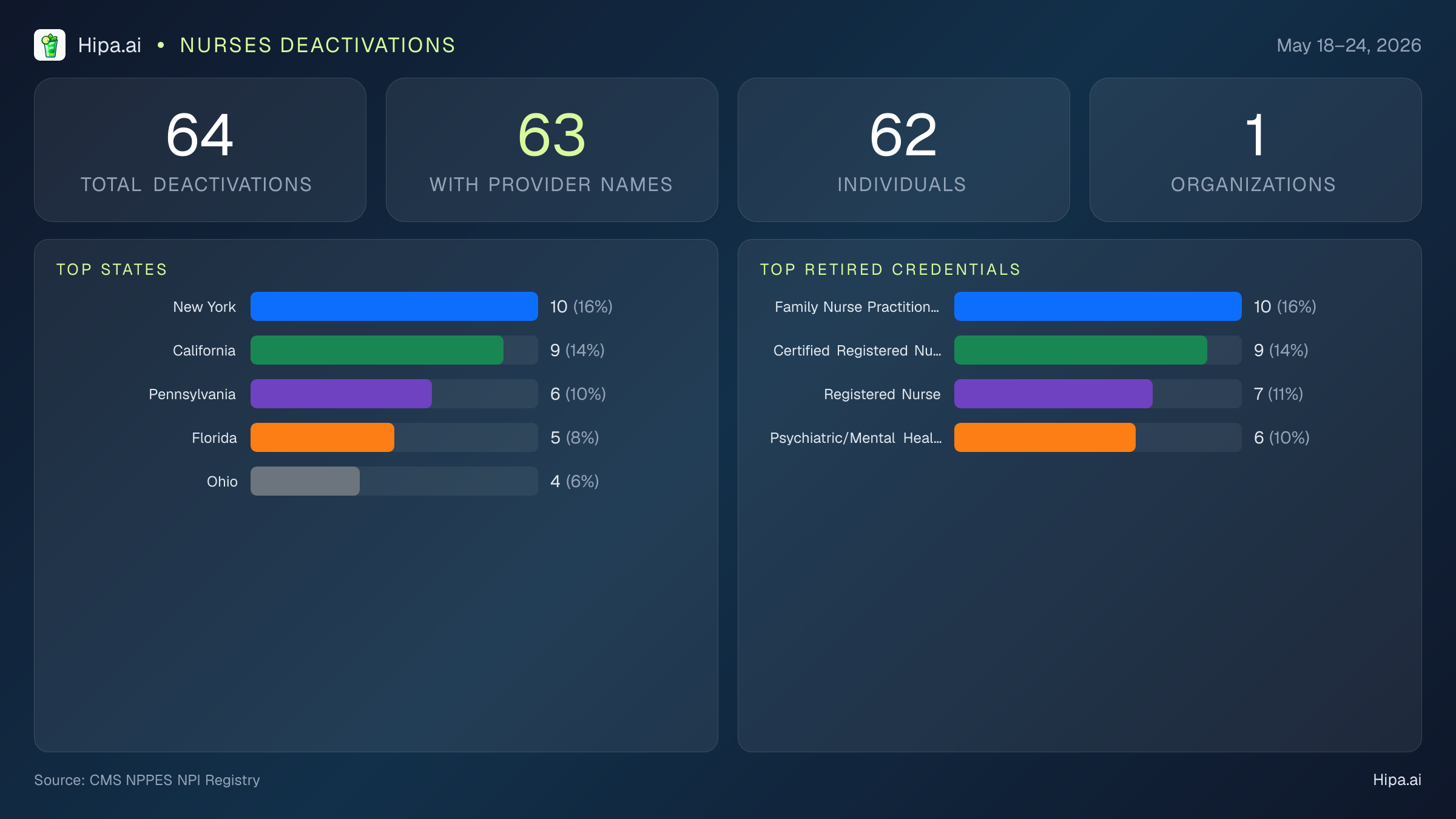
The CMS NPPES public registry recorded 64 NPI deactivations within the Nurses segment during the week of May 18-24, 2026. Of these, Hipa.ai's name cache captured 63 records with retrievable names before CMS privacy policies removed identifying information, while one record was scrubbed. The deactivations primarily involved individual practitioners, accounting for 62 records, with one organizational entity also deactivated. New York led all states, representing 10 deactivations, or 16% of the national total for the week.
Geographic Distribution of Deactivations
Following New York's 10 deactivations, California reported the second-highest number with 9 records, comprising 14% of the total. Pennsylvania saw 6 deactivations, or 10%, while Florida accounted for 5 records, or 8%. Ohio registered 4 deactivations, making up 6%. This concentration of deactivations in highly populated states is consistent with general workforce churn and administrative updates observed in the NPPES registry, reflecting the larger number of providers practicing in these regions.
Credential and Taxonomy Insights
An analysis of the primary taxonomies among the named deactivated records reveals a diverse range of nursing roles. Family Nurse Practitioners represented the largest group, with 10 deactivations, accounting for 16%. Certified Registered Nurse Anesthetists followed with 9 deactivations, or 14%. Registered Nurses comprised 7 records, or 11%. Other significant categories included Psychiatric/Mental Health Nurse Practitioners, Nurse Practitioners, and Licensed Practical Nurses, each with 6 deactivations, or 10% of the named total. This distribution indicates deactivations across both general and advanced practice nursing specialties.
Registry Maintenance and Workforce Dynamics
NPI deactivations are a routine administrative function of the federal NPPES registry. These status changes do not inherently signify license actions, malpractice, or a cessation of practice. Providers may deactivate an NPI for various reasons, including retirement, changing practice locations, consolidating multiple NPIs, or transitioning between individual and organizational entity types. The ongoing deactivations reflect the dynamic nature of the U.S. healthcare workforce and the continuous maintenance of the national provider identifier system.