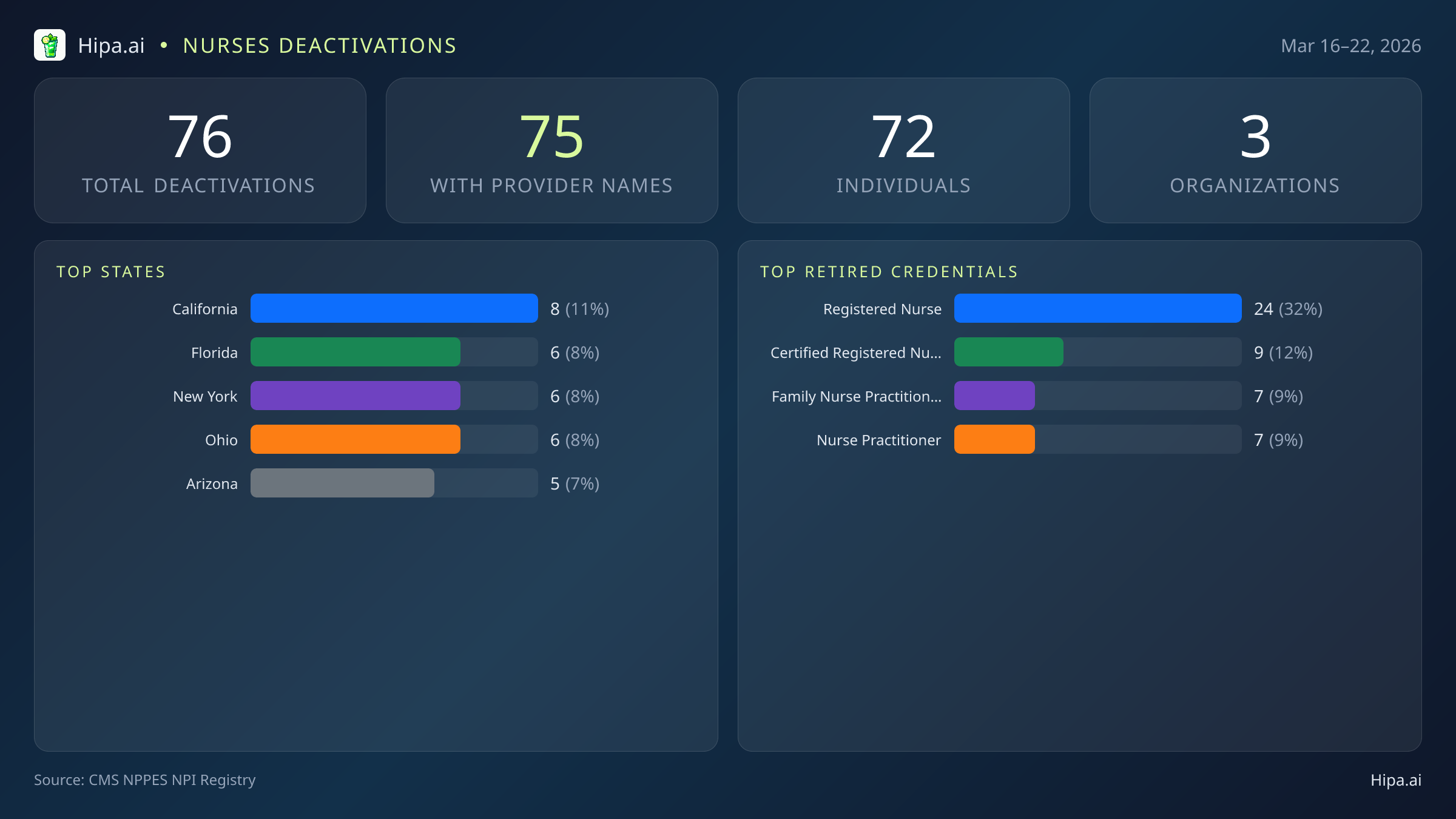
In the week of March 16-22, 2026, the CMS National Provider Identifier (NPI) registry recorded a total of 76 NPI deactivations within the Nurses category. Of these, 75 records retained retrievable name information, while one record was scrubbed of identifying details in accordance with CMS privacy policies. California led all states with 8 deactivations, representing 11% of the week's total.
Geographic Distribution of Deactivations
Beyond California's lead, several other states showed notable numbers of nurse NPI deactivations. Florida, New York, and Ohio each recorded 6 deactivations, with each state accounting for 8% of the national total. Arizona and Texas followed closely, each reporting 5 deactivations, or 7%. This concentration in populous states often reflects larger overall healthcare workforces and, consequently, a higher volume of administrative changes as providers retire, relocate, or update their NPI records.
Credential and Taxonomy Insights
An analysis of the named deactivations reveals the primary professional roles affected. Registered Nurses (163W00000X) comprised the largest group with 24 deactivations, representing 32% of the named records. Certified Registered Nurse Anesthetists (367500000X) followed with 9 deactivations, accounting for 12%. Nurse Practitioners (363L00000X) and Family Nurse Practitioners (363LF0000X) each saw 7 deactivations, each making up 9% of the total. Additionally, Licensed Practical Nurses (164W00000X) accounted for 6 deactivations, or 8%. This mix highlights deactivations across various levels of nursing practice, from generalists to advanced practice roles.
Contextualizing NPI Deactivations
NPI deactivations are an administrative function of the federal registry and do not inherently indicate licensure issues, malpractice, or a provider ceasing practice. Such changes can occur for various reasons, including retirement, changes in entity type requiring a new NPI, or clerical updates to the registry. This week's data, which included 72 individual providers and 3 organizations, reflects routine maintenance of the NPI database and the natural churn within the U.S. healthcare workforce.